Mastering Cursive: A Step-by-Step Guide to Writing in Cursive
Cursive handwriting, with its fluid, connected letters, is a skill that has been passed down through generations. While many modern tools facilitate communication, the art of cursive writing remains timeless. If you're eager to learn or improve your cursive writing skills, you're in the right place. Let's delve into the world of cursive and explore how to write in this beautiful script.
Writing cursive is not just about putting pen to paper; it's about understanding the flow and rhythm of connected letters. It's about feeling the weight of your pen and the pressure you apply. It's about practicing until you find your unique style. So, grab a pen and some paper, and let's embark on this journey together.
Understanding the Basics of Cursive Writing
Cursive writing is based on a set of fundamental rules that govern how letters connect to form words. Understanding these rules is the first step in learning how to write cursive.


Firstly, cursive writing is based on a series of strokes and lines that combine to form letters. These include upstrokes, downstrokes, circles, and slanted lines. Understanding these basic strokes will help you form letters more accurately.
uppercase Letters
Uppercase letters in cursive typically start at the baseline, the imaginary line where most letters sit. They usually consist of a combination of upstrokes, downstrokes, and circles. For example, the letter 'A' starts at the baseline with a downstroke, then loops around to make a circle before ending with an upstroke.


Practice writing each uppercase letter of the alphabet in cursive. Start by writing them disconnected to get the hang of the strokes. Then, progressively connect them as you become more comfortable.
Lowercase Letters
Lowercase letters begin at the baseline and extend to a capital height, with certain letters dipping below the baseline. For instance, the letter 'd' starts with a downstroke, loops around like in 'A', but continues below the baseline.
Much like uppercase letters, practice writing lowercase letters individually first, then connect them to form words.
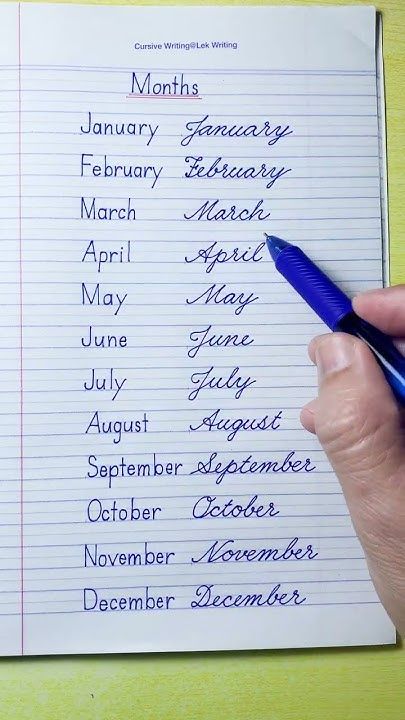


Mastering the Flow in Cursive Writing
Once you're comfortable with the individual letters, it's time to link them together to form words and sentences. The flow of cursive is what makes it unique and beautiful.
There are two basic types of letter connections: ligatures and descenders.
Ligatures
Ligatures are the fancy name for the connecting strokes between letters. They allow letters to blend into one another, creating the characteristic cursive flourish. Practice joining letters with ligatures to develop your cursive flow.

For example, in the word 'and', the 'n' and 'd' are joined, creating a ligature. Try writing this word repeatedly, focusing on the smooth connection between the two letters.
Descenders
Descenders are the letters that dip below the baseline, such as 'g', 'j', 'p', and 'y'. They allow for variation in line height, adding a dynamic element to your cursive writing.
Practice writing words and sentences that include letters with descenders to get a feel for these strokes. Remember to maintain consistent letter height and slant while writing.
Developing Your Cursive Style
Now that you've mastered the basics of cursive writing, it's time to develop your unique style. Cursive is highly personal, and your handwriting should reflect your personality.
Play around with slant, line height, and letter size. Try writing your name in different styles, experiment with different pen grips, and use various pens and inks. Find what feels comfortable and expressive to you.
Practice, Practice, Practice
Consistency is key in developing your cursive writing. Make it a point to practice every day, even if it's just for a few minutes. Writing passages from books, creating lists, or journaling are all great ways to reinforce your cursive skills.
Consider using guided exercises or apps that help you improve your handwriting. Some popular ones include iTraq and MyScript Calculator.
Learn from Others
Surround yourself with good examples of handwriting. Look at hand-lettered quotes, write in calligraphy, or attend workshops to learn from more experienced writers. You can gain a lot of inspiration and insight from observing others.
Remember, learning to write in cursive is a journey. It takes time, patience, and practice. But with dedication, you'll find that cursive writing can be a rewarding and beautiful way to express yourself.
So, don't be discouraged if your cursive doesn't look perfect right away. Keep practicing, keep experimenting, and most importantly, keep writing. Who knows? You might just find a love for cursive that lasts a lifetime.
Related Articles

Mastering Cursive: Step-by-Step Guide to Writing Capital M
Embellishing your handwriting with a capital M in cursive can add a touch of elegance to your writing. Creating this personalized script can enhance the...

Mastering Bubble Lettering: Step-by-Step Guide to Writing 'Y'
Mastering the art of bubble writing, especially the letter 'Y', can add a whimsical touch to your handwriting. This guide will help you create elegant 'Y's...

Mastering Cursive: Writing a Perfect Capital J Step-by-Step
The art of cursive handwriting is a skill that has evolved over centuries, with each letter carrying a unique style and flow. The capital letter 'J' is one of...

Mastering the Cursive "V" in Capitals: A Step-by-Step Guide
Cursive V in capital letters, or 'Capitale Letter V', is a stylish and sophisticated way to script the letter 'V' in cursive. Mastering this stroke can...

Mastering Cursive: Step-by-Step Guide to Write "Karen" like a Pro
Cursive, with its fluid lines and decorative flourishes, has always been an art form that showcases personal style. One of the many styles of cursive writing...
Mastering Cursive: Step-by-Step Guide to Write Like a Pro
Cursive writing, a fluid and expressive style of penmanship, has been a hallmark of human communication for centuries. Despite the digital age, mastering...