Mastering Cursive: Step-by-Step Guide to Write Like a Pro
Cursive writing, a fluid and expressive style of penmanship, has been a hallmark of human communication for centuries. Despite the digital age, mastering cursive is still valuable for both personal and professional growth. Here's how you can learn and improve your cursive writing skills.
First, let's understand what sets cursive apart. Unlike print writing, cursive joins letters together, making it faster to write and giving it a unique, personal touch. It's an art that combines form and function, enabling you to express yourself creatively while conveying information efficiently.
The Basics of Cursive Writing
Before delving into the intricacies of cursive, let's establish a solid foundation. Start by mastering the basic strokes and shapes that form the building blocks of cursive letters.


1. **Understand the Five Basic Strokes**: These are the upstroke, downstroke, overstroke, hook, and loop. Familiarize yourself with these strokes and their directions to build a strong understanding of cursive letter formation.
Upstroke & Downstroke
The upstroke, as the name suggests, moves upwards, while the downstroke moves downwards. These strokes are fundamental in almost every cursive letter.


**Practice**: Try writing 'h', 'b', and 'l' repeatedly to reinforce these strokes. Start slow, then gradually increase your speed as you become more comfortable.
Overstroke, Hook, & Loop
The overstroke arches over the baseline, the hook curves back down, and the loop forms a circle or oval. These strokes help create unique shapes and connections between letters in cursive.
**Practice**: Try writing 'g', 'q', and 'd' to understand and practice these strokes. Initially, focus on the shape, then worry about the connection to other letters.


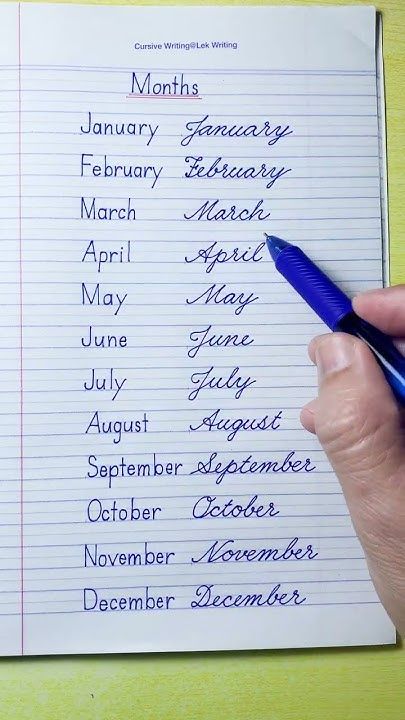


Cursive Alphabet & Slant
Next, dive into the cursive alphabet. You'll notice that each letter has a specific slant, generallydeclare towards the right (for right-handed writers). This slant adds character to your writing and makes cursive instantly recognizable.
1. **Learn the Slant**: Practice writing your name and other simple words, emphasizing the slant. This will help you develop a consistent, distinctive style.
Lowercase Letters
Lowercase letters in cursive often start with a descending stroke, follow the basic strokes we've discussed, and end with an ascending stroke. Learn these patterns for each letter to develop a smooth, flowing hand.


**Practice**: Write the lowercase alphabet, focusing on the starting and ending strokes. Then, try joining letters to create simple words.
Uppercase Letters
Uppercase letters in cursive usually start with an upward stroke, followed by the main body of the letter, and end with a descending stroke. Some uppercase letters, like 'G' and 'J', require a hook or loop stroke.
**Practice**: Write the uppercase alphabet, paying attention to the starting and ending strokes. As with lowercase letters, practice joining uppercase letters to form words.
Connecting Cursive Letters
One of the hallmarks of cursive is the smooth, continuous flow created by linking letters together. This is achieved by practicing letter combinations and learning common letter connections.
Common Letter Groups
Some letter combinations, like 'he', 'th', 'oo', etc., are especially common. Learn these groups individually, then practice writing them in context of words and sentences.
**Practice**: Write common letter combinations repeatedly to build speed and accuracy. Gradually increase the difficulty by incorporating these combinations into words and sentences.
Cursive Ligatures
Ligatures are special letter combinations where one letter is written over or under the previous one to save time and create a more flowing script. Familiarize yourself with these ligatures, like 't' with 'j' or 'f', to elevate your cursive.
**Practice**: Incorporate these ligatures into your cursive practice. It may feel awkward at first, but with practice, they'll become second nature.
Practice is key to mastering cursive writing. Always strive for accuracy and consistency, even if it means starting slow. Over time, your speed and fluidity will improve, and you'll develop a unique, expressive cursive style that's all your own.
Remember, learning cursive is not just about penmanship; it's about self-expression. It's about taking a moment to write something by hand, to connect with the words you're expressing, and to make them truly yours. So, grab a pen, some paper, and let the art of cursive writing flow from you.
Related Articles

Mastering Cursive: Step-by-Step Guide to Write "Karen" like a Pro
Cursive, with its fluid lines and decorative flourishes, has always been an art form that showcases personal style. One of the many styles of cursive writing...

Mastering Cursive: Step-by-Step Guide to Writing Capital M
Embellishing your handwriting with a capital M in cursive can add a touch of elegance to your writing. Creating this personalized script can enhance the...

Mastering the Cursive "V" in Capitals: A Step-by-Step Guide
Cursive V in capital letters, or 'Capitale Letter V', is a stylish and sophisticated way to script the letter 'V' in cursive. Mastering this stroke can...

Mastering the Capital D in Cursive: Step-by-Step Guide
The elegant easternтою of cursive writing has long held a special place in the art of handwriting, with one of its most distinctive features being the 'capital...

Mastering Sight Words: Step-by-Step "Write the" Guide
The phrase "write the sight words the" often comes up in discussions about reading instruction and assessment. Understanding this phrase is crucial for both...

Mastering Articuno: Step-by-Step Guide to Drawing Like a Pro
Ever dreamt of capturing the essence of Articuno, the legendary Ice/Flying-type Pokémon, on paper? With a bit of patience, the right techniques, and our...