"Cave Explanation: The Dummies' Guide to Plato's Allegory"
The Allegory of the Cave, put forth by the Greek philosopher Plato in his work "The Republic", is a fascinating and thought-provoking story that has puzzled and enlightened generations of readers for over two millennia. It's a tale that, once understood, can unlock profound insights into the nature of reality, perception, and enlightenment. But if you're like many of us, you might find Plato's dense, ancient Greek text a bit daunting. That's why we're here - to demystify this allegory in simple, engaging language, so you can grab the essence and apply it to your life today. Let's dive right in!
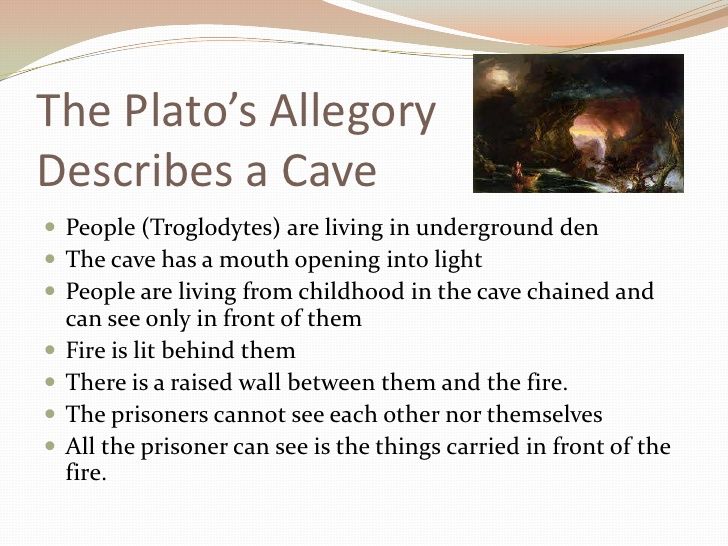
Plato sets the stage with a dramatic scene. Imagine a cave, inside which prisoners have been held since birth, with their legs and necks chained in such a way that they can only look straight ahead. Behind these prisoners, a fire burns, and between the fire and the prisoners, a low wall stands, preventing the prisoners from seeing behind it. What the prisoners can see, though, are shadows on the cave wall in front of them, cast by objects passing behind them - objects they cannot see directly. To these cave-bound individuals, these shadows are reality.
Understanding the Allegorical Cave
The cave represents the world we live in, where people are chained to their perceptions and beliefs, mistaking the 'shadows' - their limited, perceived reality - for the absolute truth. The objects casting these shadows are, in fact, the forms or ideas of things, the true reality that lies beyond our everyday perception.


Now, let's explore the key characters and events in this allegory:
The Enlightened Prisoner
One of the prisoners, we'll call him Socrates for kicks, escapes and sees the true forms of things for the first time. This is akin to Plato's mentor, Socrates, who believed his wisdom came only from knowing that he knew nothing (pretty meta, right?). Socrates discovers that the shadows are mere imitations, poor reflections of the real forms.


His journey from the cave to the sun symbolizes the ascent from ignorance to enlightenment. Just as the sun Outside the cave casts light on everything, Socrates now understands the true nature of reality. The journey is challenging, though, as his eyes struggle to adjust to the light after being accustomed to the darkness.
The Return to the Cave
Socrates understands that he must return to the cave to free his fellow prisoners. He can't just stay in the world of forms, complacent and content. Enlightenment demands a social responsibility, a duty to share the newfound knowledge with others.
But here's a twist. When Socrates returns to the cave, his fellow prisoners don't believe him. They've grown accustomed to the shadows, after all, and his storytelling seems inept next to the 'reality' they've known since birth. Some might even mock him. But Socrates persists, knowing that acceptance comes with time and patience.


The Descent to Enlightenment
Plato's allegory isn't just about the path to enlightenment but also about the challenges we face when trying to bring that wisdom back to the 'real world'. The cave represents our society, where people are often resistant to new ideas, skeptical of change, and spar (malevolveno) towards those who challenge their perceptions.
However, Socrates endures, for he understands the ultimate goal: educating those in the cave, helping them overcome their misconceptions and paving the way for their own ascension to the truth. He knows, as do we, that change is a process - one that requires patience, persistence, and the unwavering belief in the power of knowledge.
So, what's the takeaway? We're all cave dwellers, navigating our world based on our perceived reality. But we have the power to challenge ourselves, to question our beliefs and seek the truth. That journey might be difficult, and others might not understand or accept our new vision at first, but with courage and conviction, we can indeed lead fellow prisoners out into the sunlight.


Related Articles

Plato's Cave Diagram: Analyzing the Allegory of the Shadows
Plato's Allegory of the Cave is a captivating philosophical thought experiment presented in his work "The Republic." This powerful metaphor explores the nature...
Simple Cave Allegory: Plato's Inexplicable Matrix
The Allegory of the Cave, often attributed to the ancient Greek philosopher Plato, is a powerful philosophical allegory that has captivated scholars, thinkers...
Allegory of the Cave: Plato's Iconic Vision Explained
Plato's "Allegory of the Cave" is a philosophical masterpiece that illuminates the journey of the soul towards enlightenment. This iconic metaphor, presented...
Plato's Cave: Who Invented the Allegory
The allegory of the cave, a profound philosophical narrative, is widely attributed to the ancient Greek philosopher Plato. However, the intrigue lies not in...
Plato's Cave Awakening: Exploring the Allegory in Action
Since its inception by ancient Greek philosopher Plato, the 'Allegory of the Cave' has served as a profound metaphor for our understanding of reality...

Understanding Plato's Cave: The Allegory Explained for Kids
The Allegory of the Cave is a fascinating story from the ancient world, written by the famous Greek philosopher Plato. Let's imagine we're in a classroom, and...