Simple Preschool Mazes for Early Learning
Engaging young minds is a joyful and critical task, and one of the tools that educators worldwide often turn to is simple mazes for preschoolers. Maze activities are not merely fun and engaging; they also play a significant role in the cognitive and emotional development of children in their early years.
The humble maze offers a wealth of learning opportunities, from developing fine motor skills and hand-eye coordination to enhancing spatial awareness and problem-solving abilities. Moreover, mazes can be tailored to fit various learning levels, making them an invaluable resource in early childhood education.
Types of Maze Activities for Preschoolers
Maze activities can range from simple, single-path mazes ideal for the youngest learners to more complex, multi-path challenges that require strategic thinking. Here are two primary types of maze activities suitable for preschoolers:


Single-Path Mazes
Single-path or one-way mazes are perfect for young children just beginning their journey into solving puzzles. They feature a single pathway that the child must follow to reach the end, teaching them to trace, follow directions, and develop fine motor skills as they move through the maze.
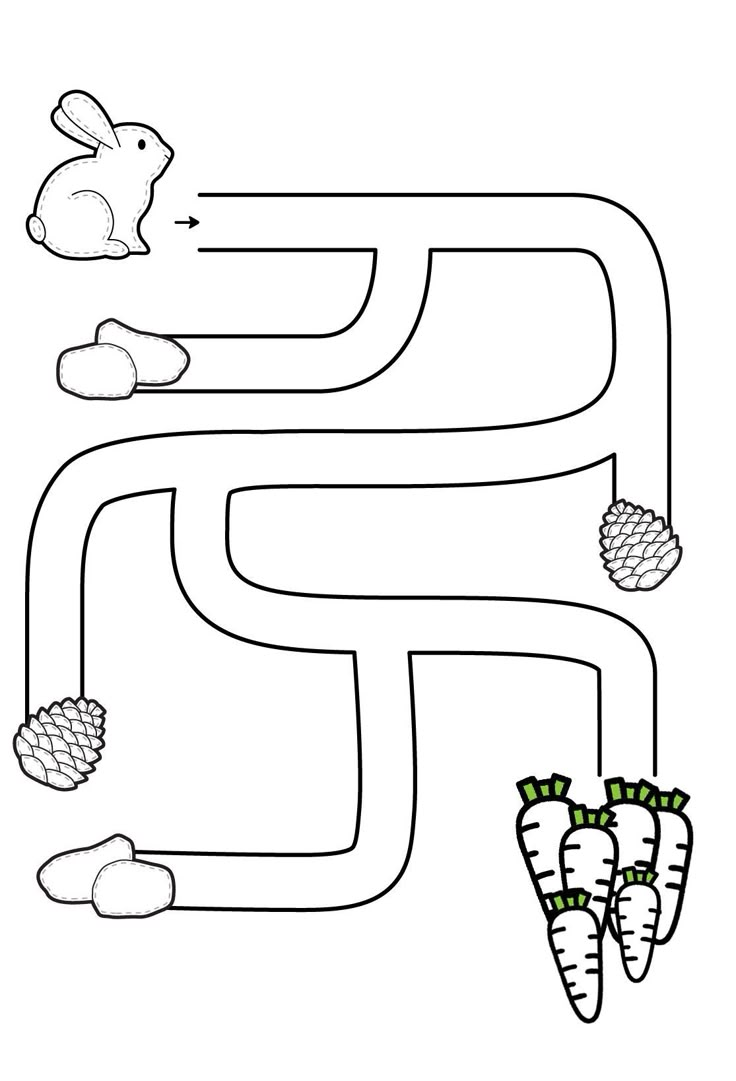
Engage young preschoolers with single-path mazes by using their favorite characters, colors, or themes. For instance, you could create a 'Follow the Bunny' maze, where the child helps the bunny find its way home through a colorful garden.


Multi-Path Mazes
As children grow more comfortable with single-path mazes, introduce them to multi-path or multi-choice mazes. These mazes present multiple paths, with only one leading to the correct solution. They challenge children to think critically, consider their options, and make decisions, thereby fostering problem-solving skills.
To make multi-path mazes engaging on a preschool level, create themed mazes with clear objectives. For example, in an 'All Aboard!' maze, children help a train find its way to the station, choosing one path at a time until they reach the end.
The Role of Mazes in Early Childhood Development
Mazes play an integral role in the multifaceted development of preschool-aged children. They foster growth in various realms, including cognitive, physical, social, and emotional development.


Cognitive Benefits
Through mazes, children refine crucial cognitive skills, such as concentration, focus, and attention to detail. As they work their way through the maze, they learn to plan, organize their thoughts, and use spatial awareness, all of which contribute to improved problem-solving abilities and critical thinking.
Additionally, mazes help children develop language and literacy skills. As they follow the path and make decisions, they engage in early reading skills, such as tracking and directionality, which are vital for Kindergarten readiness and beyond.
Social and Emotional Development
Mazes also promote social and emotional growth. When children work together on maze activities, they learn cooperation, turn-taking, and sharing. They also discover how to persevere when faced with challenges, fostering resilience and a growth mindset.


Moreover, mazes are an excellent platform for children to express their creativity and imagination. They can create their own maze paths,род or modify existing ones to tell their own stories, thereby promoting self-expression and storytelling skills.
Incorporating simple mazes into preschool activities reaps numerous benefits, from enhancing fine motor skills to fostering critical thinking and creativity. So, why notyrinth your child's learning journey with these engaging and enriching puzzles today? Let the tiny explorers embark on their adventures, one path at a time!
Related Articles

Kids Preschool Gymnastics Clip Art: Fun & Educational Graphics for Early Learning
Introducing your little ones to the joy of physical activity through Kids Preschool Gymnastics can be a wonderful journey. These early years are crucial for...

Creative Preschool Themes: Inspiring Ideas for Early Learning
Enhance your preschool's curriculum and provide an engaging learning environment with creative themes that transform classrooms and foster joyful learning...

Preschool Ten Commandments: Essential Rules for Early Learning
Welcome to a world where learning meets play, where the seeds of curiosity and creativity are sown, and where the journey of education begins - the world of...

Preschool Pics to Color: Free Printables for Early Learning Fun
Bringing joy and learning to little ones, preschool pictures to color are more than just activities; they're windows to creativity, knowledge, and skills...

Preschool Coloring Pictures: Free Printables for Early Learning
Immersing your little ones in vibrant, creative activities like coloring fosters a love for art and helps them develop important cognitive and motor skills...

Eel Crafts for Preschool Kids: Creative Learning
Welcome to the vibrant world of Eel Crafts Preschool, a learning space where creativity meets education in a unique and engaging way. Located at the heart of...